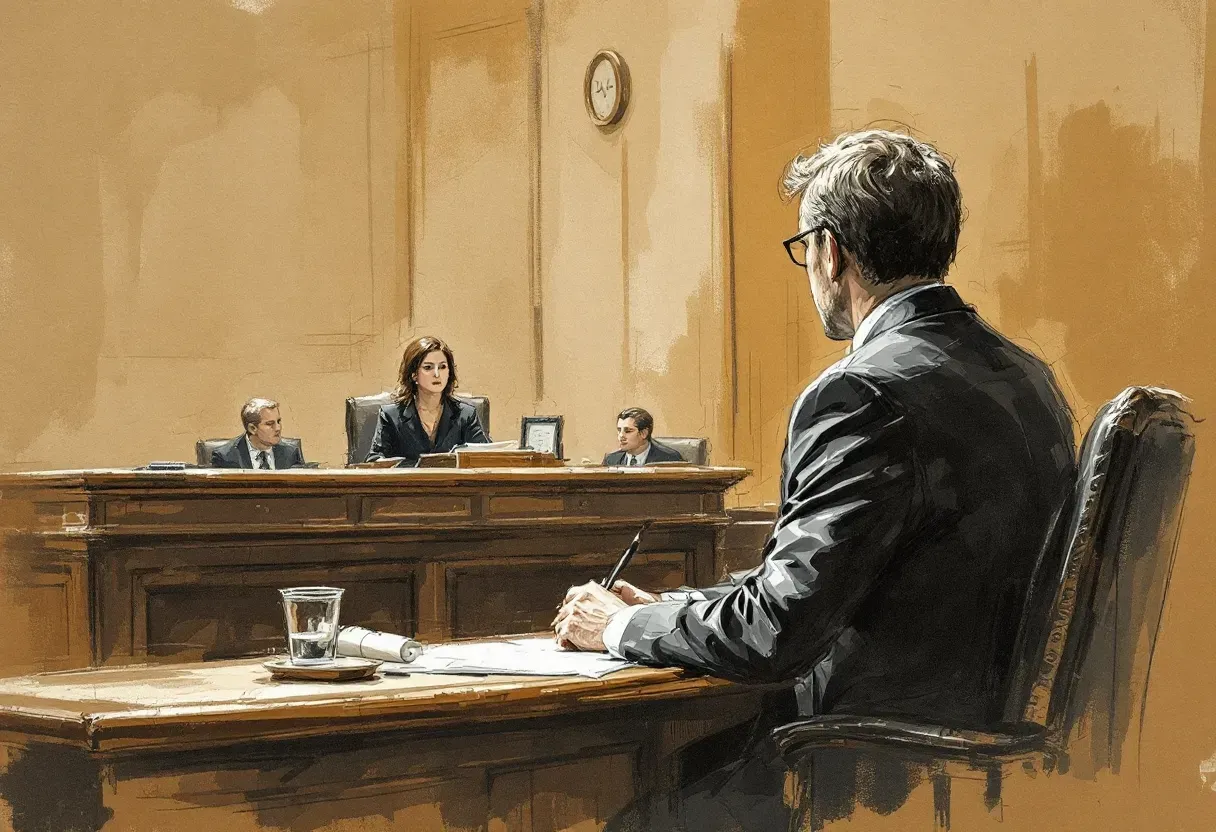
Juvenile cases in Michigan are handled in the Family Division of the circuit court — not in district court — and they run on a different procedural track than adult criminal cases. A juvenile case involving an Ann Arbor resident proceeds in the Washtenaw County Trial Court, Family Division (Juvenile Section), located at 101 East Huron Street in Ann Arbor. Juvenile jurisdiction, dispositions, and record protections are governed primarily by MCL 712A.
Who Is Considered a Juvenile — Raise the Age
Under Michigan’s “Raise the Age” law, which took effect October 1, 2021, juvenile jurisdiction extends to youth under 18 at the time of the alleged offense. Before that date, 17-year-olds were automatically prosecuted as adults. Now, 17-year-olds are generally handled in the Family Division like other juveniles, with narrow exceptions for designated cases and waived cases (both discussed below).
How a Juvenile Case Begins
A juvenile case begins when a law enforcement agency refers a matter to the prosecutor or files a complaint with the court. Minor offenses may be handled through the consent calendar — an informal, non-adjudicatory track that does not produce a formal adjudication on the record. More serious matters proceed on the formal calendar, where the juvenile is charged by petition, enters a plea or goes to trial (a bench trial or, in limited circumstances, a jury trial), and — if adjudicated responsible — is sentenced at a disposition hearing.
Pretrial Detention and Release
Juveniles may be held at the Washtenaw County Youth Center pending further proceedings. Detention decisions are governed by MCL 712A.13a and by the Michigan Court Rules, and are reviewed at a preliminary hearing. Courts generally prefer the least restrictive setting consistent with community safety and the juvenile’s appearance at future hearings. Home detention, tether, and release to a parent or guardian are common alternatives to secure detention.
Designated and Waived Cases — Charging as an Adult
Not every juvenile case stays in the Family Division. Michigan provides three routes by which a juvenile may be prosecuted as an adult:
- Traditional waiver (MCL 712A.4) — for juveniles 14 or older charged with a felony, the prosecutor may petition the Family Division to waive jurisdiction to the adult criminal court after a two-phase hearing evaluating probable cause and the best interests of the juvenile and the public.
- Prosecutor-designated case (MCL 712A.2d) — the prosecutor may designate certain specified-felony cases for trial in the Family Division under adult criminal procedure, preserving juvenile disposition options, blended sentencing, or adult sentencing depending on the outcome.
- Automatic waiver / direct file (MCL 764.1f) — for juveniles 14 through 17 charged with certain specified felonies (including first-degree murder, armed robbery, first-degree criminal sexual conduct, carjacking, and certain weapons and arson offenses), the prosecutor may file the case directly in the adult criminal court, bypassing the Family Division.
The choice among these three tracks — and the fight to keep a case in the Family Division whenever possible — often shapes the case more than any individual charging decision.
Adjudication and the Rights That Apply
Juveniles have most of the same constitutional protections as adult defendants: the right to counsel (In re Gault, 387 U.S. 1 (1967)); the right to confront witnesses; the privilege against self-incrimination; and the requirement that every element be proven beyond a reasonable doubt (In re Winship, 397 U.S. 358 (1970)). Juveniles do not have a federal constitutional right to a jury trial (McKeiver v. Pennsylvania, 403 U.S. 528 (1971)), but Michigan law provides a limited jury-trial right in certain Family Division proceedings and in designated cases.
Disposition Alternatives Under MCL 712A.18
If a juvenile is adjudicated responsible, the court selects a disposition from a menu of alternatives under MCL 712A.18. These range from minimal intervention to out-of-home placement:
- Warn and dismiss, or place on a consent calendar (informal disposition)
- Probation with conditions (school attendance, counseling, community service, restitution, curfew, tether)
- Intensive in-home probation services
- Placement in a private or public child-caring institution
- Commitment to the Michigan Department of Health and Human Services for residential treatment
- Secure-facility placement
- In designated cases, blended sentencing or adult sentencing where eligibility triggers are met
Dispositions are reviewed periodically, and well-prepared dispositional reports and school, mental-health, and family documentation can meaningfully change the recommendation.
Record Protection and Set-Aside — Clean Slate for Kids
Juvenile records in Michigan are nonpublic and are not part of the public criminal record in the same way that adult convictions are, but they are not automatically invisible. Two set-aside pathways exist:
- Application-based set-aside (MCL 712A.18e) — a person may apply to set aside a juvenile adjudication after a statutory waiting period. Certain offenses are excluded.
- Automatic set-aside under Clean Slate for Kids (MCL 712A.18t) — enacted in 2020 and effective in later years, this provides automatic set-aside of most juvenile adjudications after a statutory period, without the need to file an application. Certain serious offenses remain excluded from automatic set-aside.
A set-aside juvenile adjudication is treated, for most purposes, as if it never occurred — important for school admissions, employment, military enlistment, and licensure.
Collateral Consequences for Juveniles
Even without a public record, juvenile cases can carry real collateral consequences: school discipline, loss of extracurricular eligibility, driver’s license sanctions for alcohol and drug offenses under MCL 257.625n, sex-offender registration for certain offenses under SORA, immigration consequences for non-citizen juveniles, and loss of firearm rights on certain adjudications. Coordinated strategy — working with school discipline offices, MDHHS workers, therapists, and family — often does more than any single courtroom argument.
Defending Juvenile Cases
Juvenile defense requires attention to the same suppression, sufficiency, and procedural issues that arise in adult cases, plus a separate set of developmental and dispositional questions. Key pressure points include whether an in-custody statement was voluntary and obtained with proper Miranda and parental-presence considerations; whether the prosecutor’s waiver or designation decision is supported under the statutory factors; whether the evidence is sufficient to sustain the petition as charged; and whether the proposed disposition is the least restrictive consistent with rehabilitation. Diversion, consent-calendar resolution, and — in the right cases — outright dismissal are realistic goals.
Contact the Firm
The Law Offices of Joseph A. Simon, PLLC has over 40 years of experience defending criminal cases in Washtenaw County, including juvenile matters in the Family Division. For a confidential consultation about a juvenile case, waiver, designation, disposition, or set-aside matter involving Ann Arbor, call (734) 887-6200 or email joe@simoncriminaldefense.com.
Related Practice Areas
For an experienced Ann Arbor, MI juvenile defense lawyer, The Law Offices of Joseph A. Simon, PLLC has defended juvenile defense matters across our Ann Arbor practice for more than 40 years as part of our full criminal defense practice. For a deeper look at the statutes, penalties, and defenses that apply, see our pillar article on Michigan juvenile defense. Related matters our firm handles in Ann Arbor include Ann Arbor assault defense, Ann Arbor drug crime defense, and Ann Arbor CSC defense.